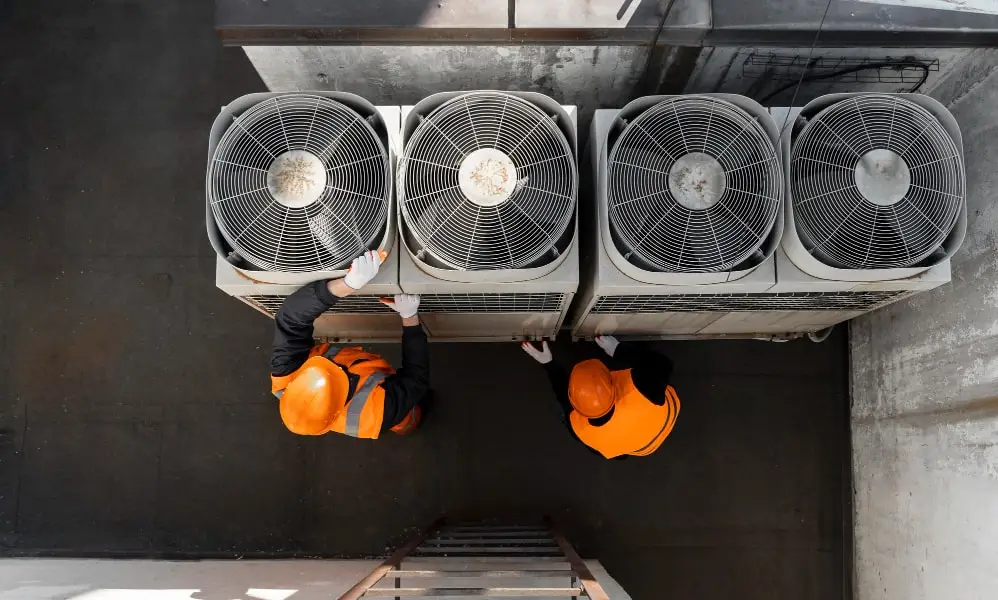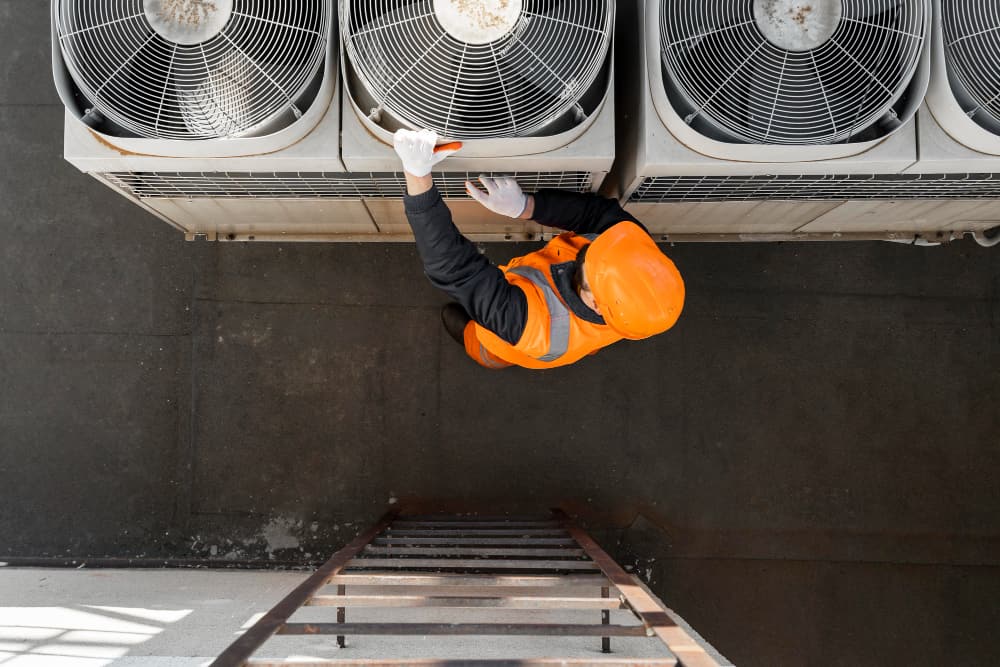
Two workers in orange vests and helmets inspect four large industrial air conditioning units from above, highlighting the importance of regular maintenance to determine how long HVAC systems last in an outdoor urban setting.

How Long Do HVAC Systems Last? The Average Lifespan and Key Insights

Two workers in orange safety vests and helmets inspect four large rooftop air conditioning units—an important part of learning How Long Do HVAC Systems Last—in an industrial setting, viewed from above.

Welcome to Stanley Heating and Cooling blog – your ultimate source for all things HVAC. Today, we’re addressing a question that many homeowners and businesses have on their minds, “how long do HVAC systems last?” Understanding the lifespan of these crucial systems can help you better plan for maintenance, repairs, or replacements and ensure that your living or working environment remains comfortable all year round.

Typically, a well-maintained HVAC system should last around 15 to 25 years. However, individual components such as furnaces and boilers can last even longer, up to 30 years, while parts like air conditioners and heat pumps usually have a slightly shorter lifespan, around 10 to 15 years. If you’re uncertain about the age of your HVAC system or have concerns about its lifespan, Stanley Heating and Cooling is here to assist. Our HVAC services in Dayton, Ohio, are tailored to efficiently address any residential or commercial heating and cooling systems.

Factors Influencing the Lifespan of Your HVAC System

If you’ve been asking, “how long do HVAC systems last?” understand that the lifespan of your HVAC system isn’t solely determined by time. It’s influenced by a combination of several essential factors. Primarily, the quality of installation plays a crucial role; a professionally and meticulously installed system will invariably outlast one that’s hastily or improperly set up. The degree of regular maintenance is another vital component; routine checks and fixes can early detect and address potential issues, upholding the system’s efficiency and extending its longevity. Additionally, the frequency of system usage significantly impacts its lifespan. Units that operate consistently, especially under harsh weather conditions, are prone to faster wear and tear. Trust Stanley Heating and Cooling for all your HVAC repair and maintenance needs to maximize the lifespan and efficiency of your investment.

Several factors can affect how long your HVAC system lasts. Let’s explore these in detail.

Quality of Installation

The way your HVAC system is installed significantly impacts its longevity. If the installation process is rushed or mishandled, your system may not last as long as it should. At Stanley Heating and Cooling, our professional technicians ensure top-notch installation, guaranteeing that your HVAC system gets off to the best start.

Maintenance

Regular maintenance is the key to extending the lifespan of your HVAC system. Scheduled inspections and tune-ups can detect and rectify potential issues early, thereby avoiding costly repairs or system failure down the line.

Usage

The more you use your HVAC system, the shorter its lifespan might be. For instance, HVAC systems in hotter climates often run more frequently, leading to quicker wear and tear.

Quality of the System

The quality and brand of your HVAC system also contribute to its longevity. Top-tier systems with high-quality parts tend to outlast cheaper, lower-quality options.

How to Extend the Lifespan of Your HVAC System

Now that we’ve discussed how long an HVAC system lasts let’s look at ways to increase their lifespan.

Regular Maintenance

Schedule professional maintenance at least once or twice a year. Maintenance tasks include cleaning, inspection, and minor repairs, all aimed at enhancing the system’s efficiency and longevity.

Prompt Repairs

Don’t ignore small issues. If your HVAC system is making strange noises, emitting foul odors, or not working as efficiently as it should, call in the professionals promptly. Delaying repairs can lead to more significant problems down the line.

Change Filters Regularly

Dirty filters make your HVAC system work harder, leading to premature wear and tear. Ensure to replace your filters every 1-3 months, depending on usage and the filter type.

Install a Programmable Thermostat

A programmable thermostat can help reduce the workload on your HVAC system by controlling the temperature efficiently, which in turn can add years to the system’s life.

While HVAC systems are designed to last for many years, there will come a time when you’ll need to consider replacing your system. Some signs that it might be time for a new system include: your HVAC system is over 15 years old, frequent and costly repairs, increased energy bills, or uneven temperatures throughout your property.

When that time comes, rely on the expert team at Stanley Heating and Cooling. We offer a variety of high-quality HVAC systems and professional installation services. We’re here to help you choose the right system for your needs and ensure it’s installed correctly for optimal performance and longevity.

Get the Most Out of Your HVAC System with Stanley Heating Cooling & Plumbing

In conclusion, the answer to “how long do HVAC systems last” isn’t a simple number. It depends on various factors including installation quality, maintenance routine, usage, and the system’s quality. However, with proper care and professional assistance, you can significantly extend the lifespan of your HVAC system, ensuring comfort and efficiency for many years to come.

For more information on HVAC maintenance, repair, or replacement, contact Stanley Heating and Cooling today. We are committed to providing you with the best HVAC services, ensuring that your HVAC systems last as long as possible.

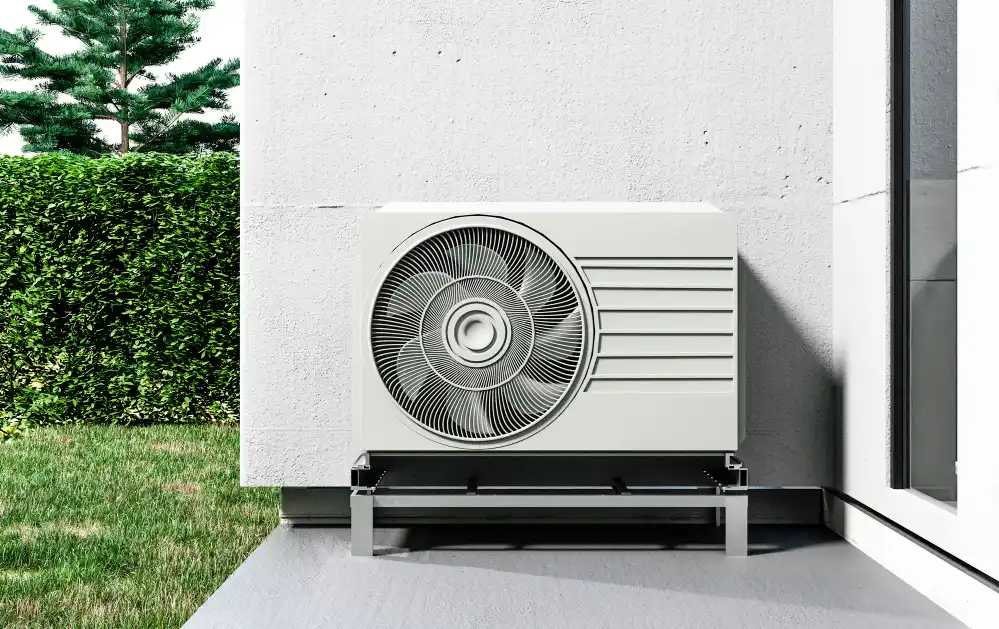
A modern outdoor air conditioning unit, which raises the question "can AC compressor be repaired," is mounted on a small platform next to a white building, with green grass, hedges, and a pine tree visible in the background.

Understanding the Repair Possibilities for Your AC Compressor

One of the most frequently asked questions in air conditioning maintenance is, “Can an AC compressor be repaired?” We will explore all possibilities associated with compressor repair to provide a comprehensive answer to this important and complex inquiry. By understanding its components, issues, and potential solutions, you’ll be ready to decide when your air conditioner encounters problems and when is the right time to call for professional AC repair service in Dayton, Ohio. Please keep reading and learn more about AC compressors and their repair!

What Is An AC Compressor?

Before understanding how to repair an AC compressor, it is important to understand its function and purpose. An AC compressor serves as the core of an air conditioning unit. It distributes the refrigerant across indoor and outdoor coils of the unit for heat exchange.

AC compressors play a vital role in cooling processes, so if they malfunction, they might fail to provide adequate cooling of your home. Thus, when considering whether an AC compressor repair can be undertaken, it’s crucial to consider both pros and cons before deciding.

Common Issues with AC Compressors

Over its lifetime, AC compressors may develop various problems. Some of the more prevalent ones are:

Overheating: Overworked air conditioners often overheat during hot summer months. 

Dirty Coils: If condenser coils become dirty, heat dissipation will not take place effectively and cause overheating of the compressor.

Low Refrigerant Levels: If your AC system has a refrigerant leak, its compressor could overheat from working without sufficient cooling.

Electrical Issues: When issues with wiring or motor come into play, they could create electrical disturbances. It affects the compressor’s operation.

Can an AC Compressor Be Repaired?

When answering the question, “Can an AC compressor be repaired?” It is important to remember that there is no easy yes or no answer. It depends on several factors. Let’s breakdown them:

Age of the Unit: Repair may be more cost-effective than replacement for newer units. However, energy-efficiency advances continue to evolve, and newer models offer superior energy savings potential.

Type of Damage: Some damages can be repaired while others cannot. Electrical issues, for instance, are usually manageable, while compressor seized-up or burnt-out parts could necessitate replacement.

Cost of Repair Vs. Replacement: When considering whether the cost of a repair justifies itself, replacement might be more economical than repair. 

Warranty: If your air conditioning unit is still covered under its original warranty, you may be eligible for repair or replacement of its compressor at no additional charge.

Professional Diagnosis

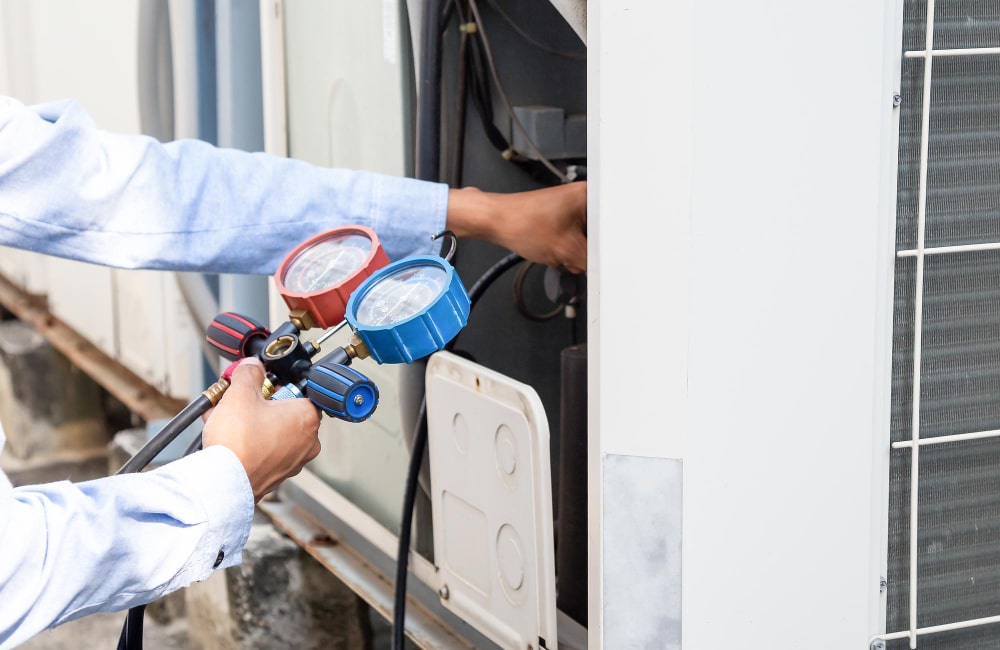
ac compressor inspection

To accurately ascertain whether your AC compressor can be repaired, the best approach is a professional diagnosis by an experienced HVAC technician. A trained specialist can accurately check any potential issues and recommend suitable solutions.

AC Compressor Maintenance

Preventative maintenance can often be more beneficial than reactive. Here are some tips:

  • Keep the outdoor unit debris-free and the condenser coils clean regularly.
  • Ensure your AC unit always has the correct amount of refrigerant.
  • Conduct annual professional inspections to identify any potential issues early.

Expert Diagnosis: Assessing Repair Viability

In conclusion, you have seen the answer to “Can an AC compressor be repaired?” above. In most cases, yes, it is possible! On the other hand, it depends on its age and condition, damage extent, and economic concerns.

If you are also looking for a service that can help you with your air conditioning units, you can contact Stanley Heating Cooling & Plumbing.

HVAC system

Understanding the Key Components of an HVAC System: A Comprehensive Guide

Everyday life tends to make us take the comfort of our homes and offices for granted. Regarding comfort, HVAC systems have become an essential element of modern buildings. It provides optimal temperature and air quality indoors. This comprehensive guide on “Understanding the Key Components of an HVAC System” seeks to demystify this complex system.

In our HVAC 101 guide, we dive deep into each key component, function, and interdependency to provide a solid understanding that enables better maintenance decisions. If you’re interested in professional HVAC services in Dayton, Ohio to ensure your system’s optimal performance, look no further than Stanley Heating, Cooling, and Plumbing. Let’s learn about the parts of HVAC systems at our places!

A Brief Overview of HVAC Systems

HVAC is an integral system in buildings that controls indoor comfort. It involves multiple technologies for maintaining temperature, humidity, and air quality – heating often provides warmth through furnaces or heat pumps. It does the ventilation, maintaining air circulation to combat pollutants while improving quality. 

Besides, air conditioning cools the environment by extracting heat for relief during warmer months. All three can either stand-alone or integrate seamlessly to meet various climate changes.

Importance & Functions of an HVAC System

Let’s take a closer look at the importance and functions of HVAC systems, and why installing a new air conditioning unit in Dayton, Ohio is a wise decision:

Importance of HVAC Systems

HVAC systems are an integral component in creating comfortable and healthy indoor environments with:

Temperature Control: These systems use climate control technology to maintain optimal indoor temperatures throughout all seasons and weather conditions. It keeps the homes and offices comfortable all year round.

Air Quality: HVAC systems recirculate fresh air while filtering pollutants such as bacteria, allergens, and dust from indoor air quality systems. It helps to improve the air quality we breathe inside our homes and offices.

Functions of HVAC Systems

HVAC systems serve multiple essential purposes:

Heating: During colder months, the heating component warms the interior space by transferring heat from an external source.

Ventilation: Ventilation is another essential function that exchanges indoor air with outdoor air, exchanging moisture, odors, smoke, heat, dust, airborne bacteria, and carbon dioxide. At the same time, it replenishes oxygen levels in return.

Air Conditioning: HVAC systems offer effective cooling in hot weather by eliminating excess heat and humidity. It creates a comfortable living and working environment.

The Fundamental Parts of a Residential HVAC System

HVAC parts play a crucial role in ensuring optimal comfort and performance. Understanding the different components of your HVAC system is essential to keep it running smoothly and efficiently. Let’s delve into each key part and its function to gain a comprehensive understanding of your residential HVAC system.

Thermostat: Your thermostat serves as the user interface for your HVAC system, sensing temperature changes and allowing you to set desired comfort levels.

Furnace: At the heart of any HVAC system is its furnace, which is responsible for heating air throughout your home. It can produce heat using various fuel sources like natural gas, propane, or electricity.

Heat Exchanger: Situated within the furnace, the heat exchanger heats up when activated to warm cool air passing over it. Its main role is to warm it before returning it into the atmosphere.

Air Conditioner: Your air conditioning unit stays outside your home and utilizes refrigerant, condensers, coils, and fans to cool air while blowing away hot air.

Ductwork: Ductwork is the system of ducts that transport hot or cold air around your home and is essential in evenly dispersing airflow throughout.

Vents: Vents provide air to each room and can be adjusted to control how much air enters.

Air Handlers/Blowers: These components move air through your ductwork system to distribute it throughout your home.

Filters: Filters are vital components of a properly functioning HVAC system and indoor air quality, trapping dust, pollen, and other airborne particles.

Common HVAC System Issues & Component Failures

HVAC repair

Even with regular maintenance, HVAC systems can encounter various problems over time. Understanding these common issues and component failures can help you take timely action to keep your system running smoothly.

Thermostat Malfunctions: The thermostat controls the operation of an HVAC system. If it malfunctions, your system may not turn ON/OFF when required. The issues can range from incorrect calibration to complete failure, requiring thermostat replacement.

Airflow Problems: Clogged filters, blocked vents, or duct leaks can all lead to insufficient heating or cooling. Regular maintenance and professional cleaning of air ducts can help prevent this common problem.

Mechanical Failures: Components like fans, belts, and bearings can wear out over time, causing the HVAC system to overheat or fail. Regular inspection and replacement of worn parts are crucial for the system’s longevity.

Refrigerant Leaks: Leaking refrigerant is a common problem in air conditioners and heat pumps. It not only decreases system efficiency but is also harmful to the environment. The leaks should be repaired promptly by professionals.

Compressor Failures: The compressors can fail due to overheating, inadequate refrigerant, or electrical problems. A failed compressor often requires complete replacement, which can be costly.

Choosing the Right HVAC System for Your Needs

Understanding the key parts of an HVAC system is vital for homeowners, facility managers, and HVAC professionals. This guide outlined the essential elements – heating, ventilation, and air conditioning units.

You can contact Stanley Heating, Cooling, and Plumbing if you are looking for the best HVAC systems for your residential or commercial place.